Air Power explores a different way of using atmospheric air. At the center of the concept is high-level air compression, which is intended to convert low-temperature atmospheric air into a higher-level heat source that can drive a heat engine through a heat-driven power cycle. The proposed system uses a hybrid heat engine that combines more than one type of power cycle.
The AirPower concept brings together compression, heat, pressure, expansion and energy conversion within one proposed system. Rather than looking at compressed air as the end point, the concept explores how the changes created during compression can become part of a larger thermodynamic process.
The process begins with atmospheric air entering the proposed system as the working medium.
Air is compressed at a controlled rate. Unlike a rapid compression approach, the AirPower concept considers a slower compression process so the thermodynamic process can take place over time.
Compression changes the pressure and temperature of the air. This creates the heat source that forms an important part of the proposed power cycle.
The resulting heat and pressure conditions are used within the hybrid heat engine to support power generation. Certain details of the power-output portion remain proprietary and are not publicly disclosed.
The working fluid then moves through the expansion stage of the proposed cycle. The AirPower concept considers controlled heating and cooling during the process rather than treating compression and expansion as isolated events.
One of the potential advantages of the concept is that cooling and ventilation can become useful outputs alongside electricity. This opens possibilities for facilities that already have substantial cooling requirements.
When atmospheric air contains water vapor and conditions allow condensation, water may be recovered as part of the process. This gives the technology potential for Atmospheric Water Generation, although actual water production depends on humidity, temperature and system conditions.
Explore the opposed CO₂ assemblies, common shaft, heat-storing recuperators, and staged compressed-air delivery described in the AirPower design. The detailed technology page explains the operating sequence, patent application, and planned development work.
More Than Electricity
One System. Multiple Potential Outputs.
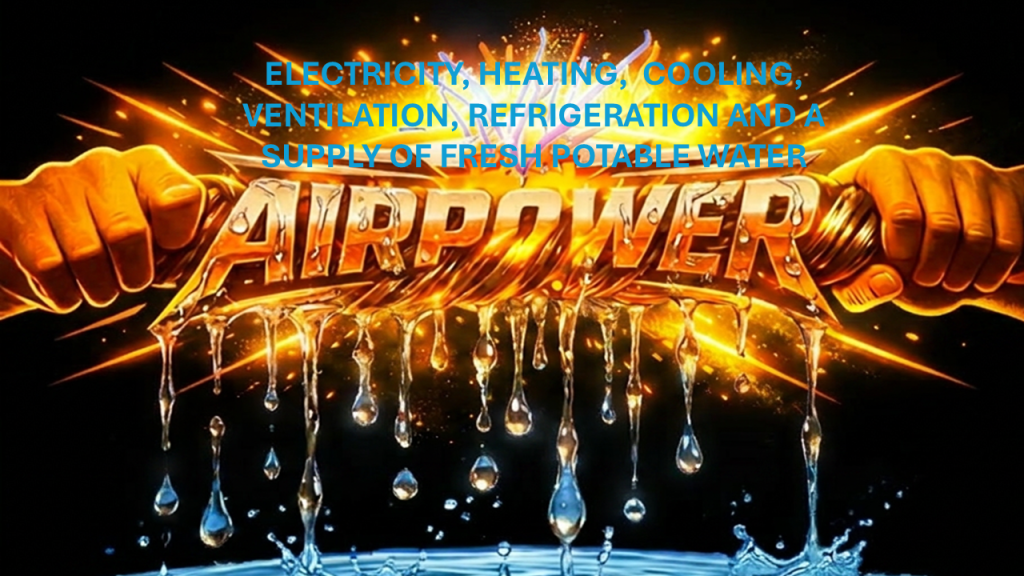
AirPower is designed around the possibility of producing multiple useful outputs from one integrated concept. The client materials describe Electricity, heating, ventilation, air conditioning and a supply of fresh water as potential results of processing atmospheric air.
The proposed combination is particularly interesting for Data Centers, where electricity demand and heat management exist side by side. AirPower could potentially provide electricity, cooling and ventilation while heat from the data center could be returned to the system as a possible heat source. A similar feedback-loop approach could be considered for industrial applications that produce usable heat.
Built Around A Thermodynamic System
The technology brings together air compression, heat management, expansion and energy conversion within a proposed Thermodynamic System. Its applications could include Clean Energy Infrastructure, Distributed Power Generation, Industrial Heat Recovery and Energy Efficiency Solutions.
The concept may also be explored for Sustainable Data Centers, Manufacturing, Industrial Facilities, Government Projects, Renewable Energy applications and Research Institutions. Each application would require its own engineering analysis, equipment design and testing.
The Technology Is Ready For The Next Stage
AirPower remains a technology concept requiring engineering, thermodynamic modeling, testing and development. Client materials identify potential collaboration with engineering firms, universities, manufacturing organizations and other technical partners. These partnerships could help evaluate the hybrid power cycle, develop equipment and determine practical operating performance.
Meet The Inventor
Robert D. Hunt
Robert D. Hunt, the inventor behind the concept, has a background in engineering and thermodynamics, including work on reactor components, free-piston engine designs, solar building materials and other inventions. His experience provides the foundation for the AirPower concept, while the next stage depends on engineering and validation.
Explore The AirPower Opportunity
Interested In The Science Behind Air Power? Learn More About The Proposed System, Its Potential Applications And The Opportunities For Engineering, Research, Manufacturing And Investment.